When we were deciding where to land, really land not just relocate, we drove through a lot of Southern Ontario. My partner Sean is Canadian, and he has family scattered across the province, so the tour felt natural. But it was also deliberate. We were leaving Austin with four kids, a lot of hope, and a very specific list of things we needed to feel safe.
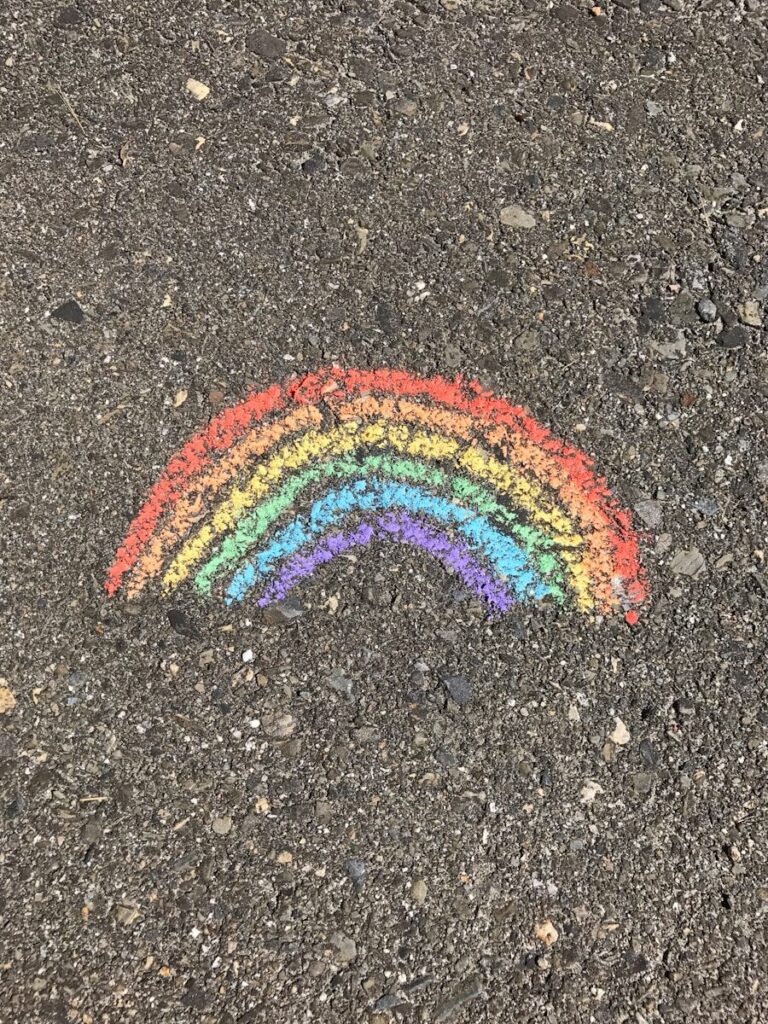
We arrived in Cambridge during Pride Month 2023. I remember the banner strung across Main Street. The rainbow painted into the crosswalk. Same gendered couples holding hands in comfort. I remember walking into what was then the Rookery, now Woolf and Co., and finding shelves of queer-positive books for every age, board games, and a kind of ease that felt like exhaling. I remember thinking: this is a place where my people might not have to be brave all the time just to exist. So we chose Cambridge, Ontario to be home.
Last week, my children attended the city’s Pride flag-raising ceremony at City Hall. They went with their class unbeknownst to us, as their class is near City Hall. They were excited. Free ice cream, and celebrating the Queer community. It sounded like a positive event. What they witnessed instead was a lesson in how quickly a place can remind you that belonging is never guaranteed.
A young person, presumably a teenager, stepped to the microphone. They seemed to have been invited to speak by the city leadership. They stated their pronouns clearly: they/them. Mayor Jan Liggett, the woman who had just spoken about Cambridge being a place where all residents feel safe, respected and celebrated, could not seem to say their pronouns correctly once. The teen was gracious. More gracious than I would have been.
The youth kept going. They began to speak about how Councillor Adam Cooper’s pronoun meme, the one that sparked a community-wide outcry earlier last year, the one that Grand River Pride called a direct violation of the council’s code of conduct, the one I took the time to comment on publicly myself, had affected them personally as a young queer person in this city.
Mayor Liggett stopped them. Politics, she said, had no place here.
My children came home and had things to say about that.
“Why couldn’t she just listen to their story, Mom?”
“Why did she need to say anything? They weren’t yelling or cursing.”
“Was she afraid of something, Mom?”
I didn’t have clean answers. What I had was the sudden, familiar weight of knowing that your children see things clearly that adults in the room are working hard not to see.
Here is what I want to say to Mayor Liggett plainly: Pride is politics. Not incidentally. Fundamentally. It commemorates June 1969, when transgender women of colour and other queer people, people who had been harassed, arrested, and brutalized by the state, fought back. That fight became a movement. That movement became civil rights legislation, human rights protections, the slow, hard-won recognition that queer and trans people are not an opinion. They are people.
Politics, by its simplest definition, is the process societies use to decide who gets protection, who gets dignity, who gets heard. To tell a trans teenager that their experience is too political for a Pride ceremony is not a neutral act. It is the act. We need to stop treating the word “political” as an insult used to silence inconvenient truths.
This does not exist in isolation. This is a pattern in our council. It has a shape. Councillor Cooper shared a meme mocking the very idea of gender pronouns earlier last year. The thing this teen was trying to share, likely trying to say made an impact on them.
A city councillor publicly shared transphobic content. And the mayor, on a public stage, was incapable of acknowledging a child’s identity and silenced their testimony. Are the adults in the room not mature enough to hear how their words hurt a neighbour, a child? Was the mayor not capable of sitting in respectful silence through her discomfort, to better understand the people she was elected to serve?
I’m not naive about politics, Canadian or otherwise. I didn’t move here expecting utopia. I moved here because, on a June afternoon in 2023, it looked like a place that was trying. That was enough for me. It is still enough, because I believe communities are made of more than their elected officials. Grand River Pride is still here. Woolf and Co. is still here. The rainbow sidewalk is still there.
But my children are watching. They are paying attention in ways that would make some of our city leaders deeply uncomfortable if they understood it. They are not watching for perfection. They are watching to see whether the adults around them — the ones with the platforms and the podiums — can manage the basic dignity of listening to someone tell their own story.
One teenager stood at a microphone on the first of June and tried to do exactly that. They deserved better than what they got.
So do my kids. So does yours.