On fatigue, fat bodies, and moral judgment
I’ve been tired for as long as I can remember.
Not the kind of tired that comes from late nights or early mornings.
The kind that sent me to bed early as a child.
The kind that let me sleep anywhere that felt safe in my youth.
The kind, as an adult, where rest never quite arrives.
As a kid, I don’t remember begging to stay up late like my sister. I knew I wouldn’t make it. And yet, I do remember waking up rested then.
In my early twenties, that changed. A half day of work, or a few hours of class, could flatten me. I would come home and lie down. Not for comfort, but because my body insisted.
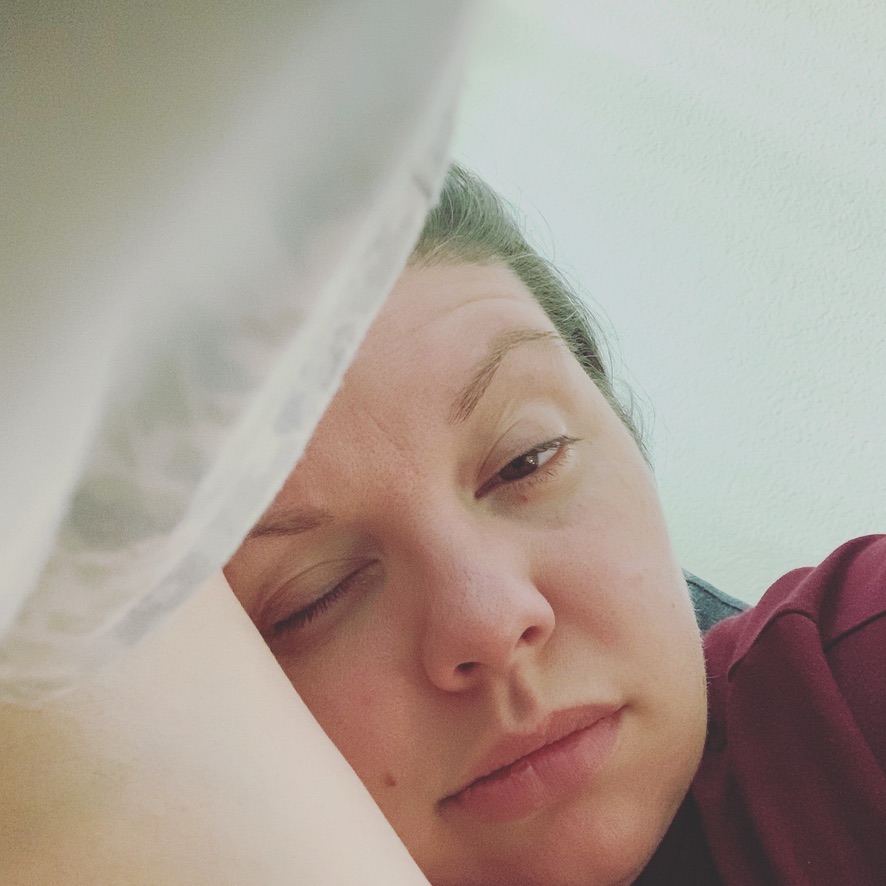
Ordinary life felt disproportionately heavy. I wondered if I was depressed. Maybe I was, a little. There was so much I wanted to do, and my body seemed to be in the way.
The world had explanations ready.
Lazy.
Unmotivated.
Fat.
I believed them longer than I should have.
For a long time, I hoped there was a pill that would make me less lazy. I didn’t hate my body, eventually, but that love came through resistance. I grew up learning what fat girls were and were not. What they deserved. What they could become. What being tired cost them.
And yet, I knew fat women who had done so much.
My memaw, sharp-witted, well-traveled. She raised three children and didn’t mince words. A great-great-grandmother who lived past one hundred. A schoolteacher who sang in musicals, taught me math, and hugged like she meant it.
None of them small.
All of them living full lives in fat bodies.
So I tried to ignore the story I was being told.
What I didn’t know then was that my body was struggling to be nourished at all.

I was first diagnosed with gastroparesis as a teenager, delayed stomach emptying so severe that nausea made eating difficult. In my twenties, navigating the U.S. medical system alone, doctor after doctor told me the problem was my weight. Even with a diagnosis in hand, I was told, implicitly and explicitly, that fat people don’t have gastroparesis. Lose the weight, and things would improve.
I tried.
I did.
I still vomited.
I was still nauseous.
I was still exhausted.
When I was diagnosed with gastroparesis again years later by a doctor who could not believe a fat body had gastroparesis, I learned more about my condition, but not enough. No referral to nutrition. No conversation about the consequences of not being able to eat enough. No one said the obvious thing out loud: malnutrition causes exhaustion. Eating less is not the same as being nourished. Starving in a fat body is still starving.
My body needed more, just in forms it could tolerate.
Later came other names. A thyroid condition. PCOS. Hypothyroidism is familiar enough that people nod when I say it. PCOS is not. The heavy, erratic periods of my youth. The bleeding so severe I couldn’t leave the house. The casual reassurance to “just take some iron,” despite ferritin levels that have hovered in anemic territory for over a decade, with unexplained headaches that would lay me out for days.
A body quietly running on empty.
After each of my children, everything intensified. The anxiety. The brain fog. The difficulty focusing. But mostly, the fatigue. A shower, just washing my hair can still leave me depleted in ways that are difficult to explain to people who have never had to ration their energy.
And still, the responses came.
You have four kids.
Of course you’re tired.
As if motherhood renders fatigue unremarkable.
As if I don’t know my own body.
As if motherhood and middle age no longer deserve curiosity.
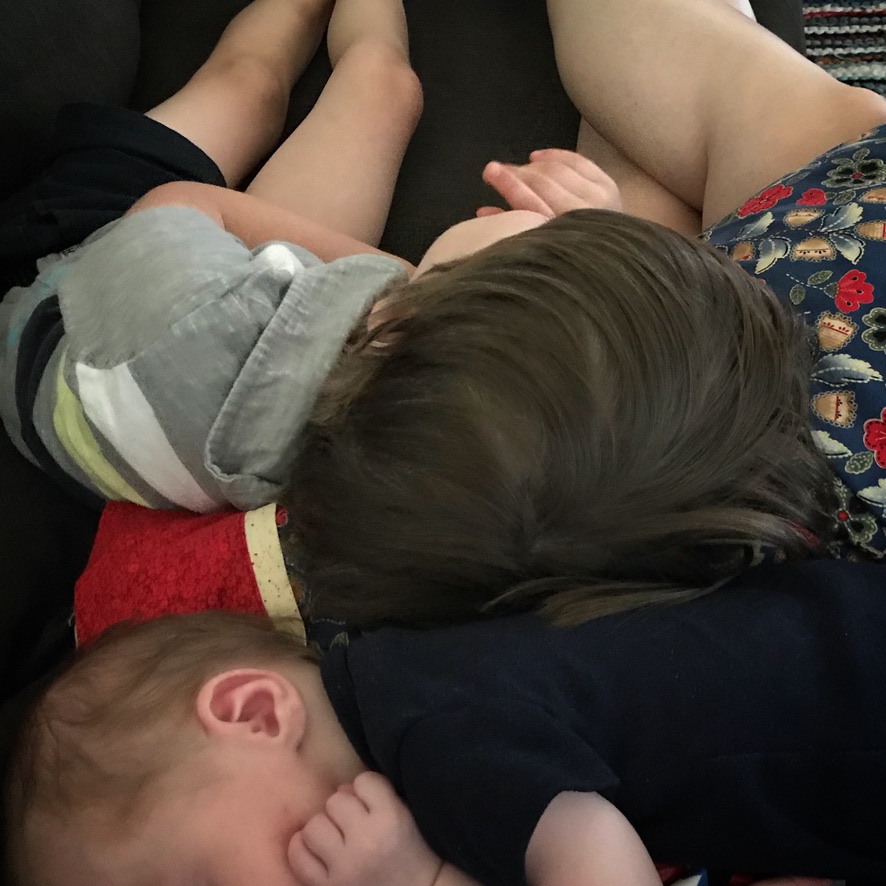
Not long after my third child was born, I sought help again. The fatigue was constant, but there were other symptoms too, pelvic pain, facial swelling, migraines that wouldn’t resolve.
A new doctor, one who described herself as holistic, offered a list: drink more water, sleep better, exercise, eliminate a long catalogue of foods.
Some of it may have been reasonable. But sitting alone in my car afterwards, I cried. How. I had a new baby. Walking caused pain. Rest was not available. The work required to get better exceeded what I had to give. I felt so alone.
I learned the pain had a name. Prolapse. I needed pelvic floor therapy. Even then, the burden was mine, to rally again and again. To absorb the strain of needing help. To not snap when my partner offered to “help” with basic tasks he should have already been doing.
What no one seemed to understand was that exhaustion isn’t solved by more instructions.
It’s made worse by them.
Care-giving isn’t especially valued in our society, but that’s another essay.
I remember having pneumonia once, bad enough that I was hospitalized. Many things stayed with me from that experience, but one above all: even then, I couldn’t fully rest.
The world doesn’t let women rest. Not really.
Even sick, even depleted, even hospitalized, there is an expectation that we will manage, reassure, stay pleasant, stay productive, stay grateful. Rest is framed as indulgence.
Needing care is treated as inconvenience.
Fatigue, in that context, isn’t just physical. It’s social. It’s the exhaustion of swimming against expectations that tell us to keep going no matter the cost.
What I’m tired of, maybe even more than the exhaustion itself, is how hard it has been to be taken seriously.
How fatigue is stigmatized.
How it’s moralized.
How it’s laughed off.
How much work it takes just to understand what’s happening in your own body.
I am still working to address it. An IUD, after years of advocating for care. IV iron. Support for anxiety and stress. A renewed attempt to understand gastroparesis with better information than I had before. Realizing migraines have more symptoms that just a headache.
I am still tired.
But I am no longer completely confused about why.
And that matters.
Because exhaustion is not a personal failure.
It is not a character flaw.
It is not laziness.
Sometimes, it is a body that has been asking for help for a very long time, and a world that didn’t want to listen.
Putting down society’s expectations is not easy. We swim against the current when we do it. And that, too, is exhausting. But I want my children to know this: exhaustion is not a moral verdict. It’s information.
Listening to it is not weakness.
It’s wisdom.
