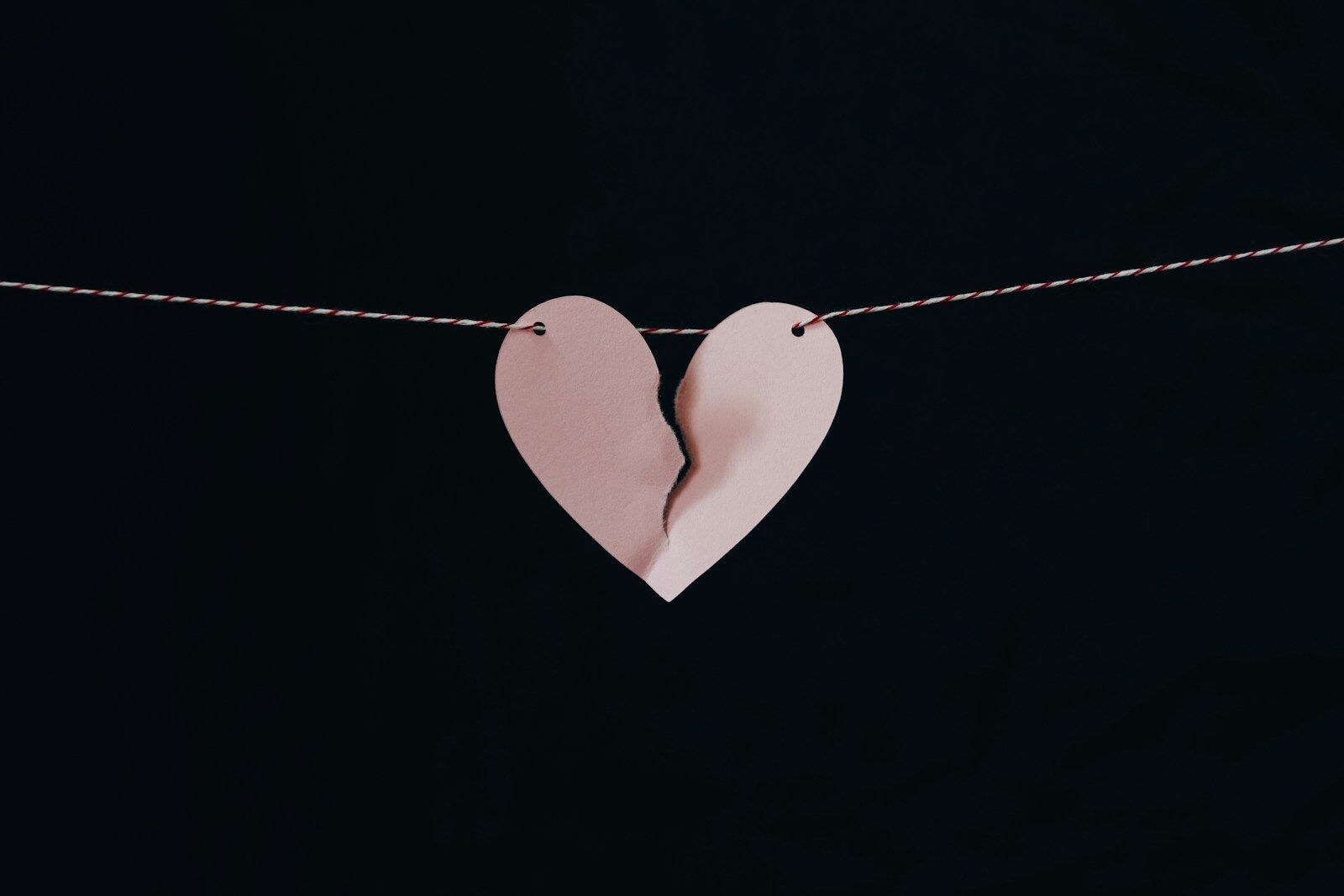
Thoughts on marriage and leaving…
A friend is getting divorced after nineteen years with her partner. It’s tender and hard. I ache for her, not because I think she’s making the wrong choice, but because I know how deep those roots go. What it means to disentangle not just a life, but an identity.

Thinking about her has me thinking about us. About my partner and me.
We almost divorced during the pandemic. I’ve never really said that so publicly. And I don’t mean “things were rocky” or “we got on each other’s nerves.” I mean the trust between us shattered. Serious boundaries were crossed. For a long time afterwards, I didn’t feel comfortable, even safe, in my own home.
There was betrayal, though not the expected kind. It was something more emotional and intimate. Something my partner didn’t fully understand at the time. Something I know he didn’t intend to cause, and yet did. And because of lock down, isolation, and survival parenting, I had to walk myself through that pain without the scaffolding I might otherwise have had.
I was my own therapist.
My own advocate.
My own voice in the dark.
The fracture was heartbreaking and enraging. I didn’t think we would recover. I started looking for work. He moved out of our room. Our oldest child, seven at the time, started asking questions. She could sense things unravelling. In such a bleak and frightening season, it was hard to get out of bed in the morning. I kept wondering: What is all this for?

On top of that, after seven years as a primary caregiver, I realized how deeply I had fallen into the trap of the “traditional wife.” I knew our children better than he did. I knew our bills, our doctors, our insurance, our payments. I cooked. I cleaned. I cared. I made magic. I educated our children.
And I was furious at myself for slipping into that role, and later at the realization that he had slipped into it too. We hadn’t chosen it intentionally. We hadn’t set out to imbalance care giving, homemaking, kinship, emotional labour, and responsibility. But there we were.

Things didn’t change overnight. But he started doing the work.
He read the books I was reading. He listened to the podcasts. He went to therapy. Not to “fix us,” but to understand himself and what had happened. He let himself feel the discomfort. He sat with the guilt. With the realization that even without malice, he had hurt me deeply.
Then I got pregnant.
I don’t remember ever feeling so happy and so terrified at the same time while staring at a positive test, and I’d done this many times before. When our baby arrived and her cleft needs pushed us to our limits, something shifted. He showed up in ways he never had before. And I let him. I asked for what I needed, and he listened.
I still wonder: would this have happened with our first child if he’d had more than a week off? If we’d lived somewhere pro-parent? If gender roles hadn’t been so deeply ingrained in both of us and the society around us?

Strangely, this baby, with needs that seemed like they might break us, instead pulled us closer.
I had to pump, so he had to feed her. He was up at night, he knew her cry. He also knew what they meant. Somewhere in that bone-deep exhaustion, something broke open. He started hearing the baby cry before I did. He was tired, yes, but wide awake. Present. There.
In ways I hadn’t known how to ask for.
In ways I’d been told weren’t his responsibility.
He began showing up without prompting. And it wasn’t just diapers and bottles, it was about seeing me. Meeting me in work I had carried alone for so long.
Her birth wasn’t a fairy tale. It wasn’t a clean slate. But it was honest. Raw in a way that, once you make it to the other side, lets you see things plainly.
We learned to name our needs. To speak our hurts. We learned that pitching in is love, and that truly seeing one another can be a balm to so much that once felt invalidated.
We speak truth more now. We show up for the hardest, most awkward things in ways we hadn’t known how to before. In ways we didn’t even see.
Before, I felt like I was holding my family, him included, while climbing a mountain. The weight was suffocating. Now, I feel tethered.
Not trapped.
Not entangled.
Tethered.

Like no matter how far we drift or how violent the storm, we’re still holding the same rope. I can’t guarantee our marriage will last forever, but I can say this: we are both wide awake now. I can also say that we are both working towards making sure that if it does come to that, I can. Most of that is financial, and I hope to write more about that soon.
I don’t know if there’s a moral here. I don’t think staying is more virtuous than leaving, or that repair is always possible or required. Some love stories end because they must. Some change shape and continue.
This is simply ours. And I’m holding deep respect for anyone walking their own version of this terrain, wherever it leads, and whatever courage it asks of them.